
What is your current position?
I am a Research Group Leader for Osteo- and Dentalimmunology. Within DIONE, I collaborate with Dr. Ulrike Baschant on project A05: “Investigating the role of iron in inflammation-induced bone loss: insights into osteoclast metabolism.”
What is your main research focus?
My group investigates the intracellular metabolism of immune and bone cells, with a strong emphasis on how metabolic reprogramming and altered bioenergetics drive inflammation and bone destruction. We are particularly interested in the crosstalk between bone and immune cells, aiming to unravel how their interactions shape the course of inflammatory and degenerative diseases.
Another key aspect of our work is the oral microbiome and its contribution to the pathogenesis of autoimmune diseases. By understanding these mechanisms, we hope to identify novel strategies for both prevention and therapy.
What does your typical workday look like?
My key task is to create an environment where my team can work efficiently by taking care of challenges behind the scenes. I spend my days mentoring PhD students, keeping projects on track, collaborating with clinical partners, and dedicating time to developing grant proposals and publications. What makes an ordinary day truly exciting are new collaborations, setting up novel experiments and models, and celebrating shared successes with the team.
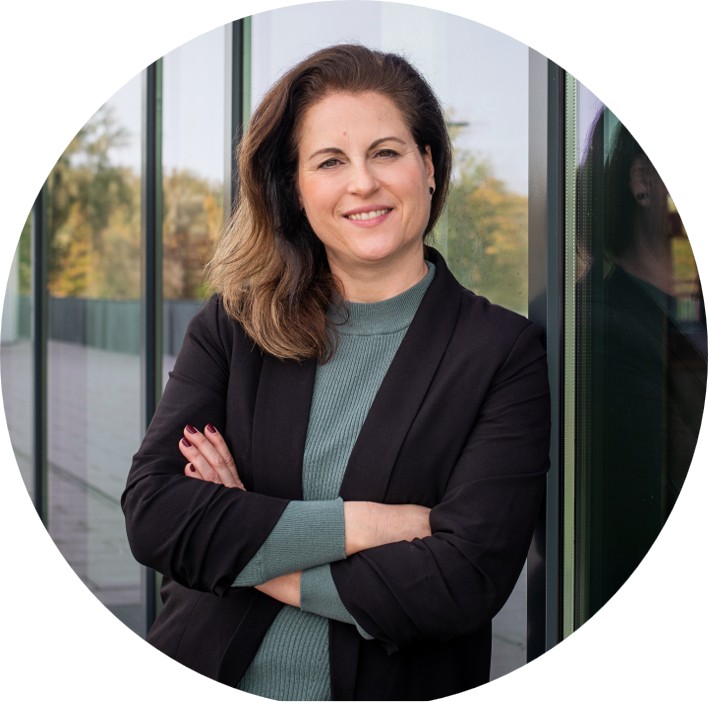
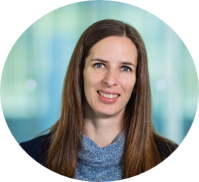
Meet our Researcher: Dr. Martina Rauner
What is your current position?
I am Professor of Molecular Bone Biology and scientific director of the Bone Lab at the Medical Faculty of the Technical University of Dresden. I also serve as the co-speaker of the Transregio CRC 369 “DIONE – Degeneration of Bone due to Inflammation” and as the speaker of the research unit FOR 5146 “FerrOs – Osteohepatic axis and bone”.
What is your main research focus?
We focus on understanding the cellular and molecular mechanisms of bone diseases related to inflammation, hormonal dysregulation, hematological disorders and malignancy. We focus on signaling pathways including BMP and Wnt signaling, FGF-23 as well as dysregulations in cellular metabolism.
What does your typical workday look like?
On most days, lots of emails for organizing and coordinating activities that are related to science, administrative and organizational aspects, or work for scientific societies and committees of our faculty. The most fun part though is talking to the scientists about their work, writing/correcting manuscripts, and writing grant proposals.
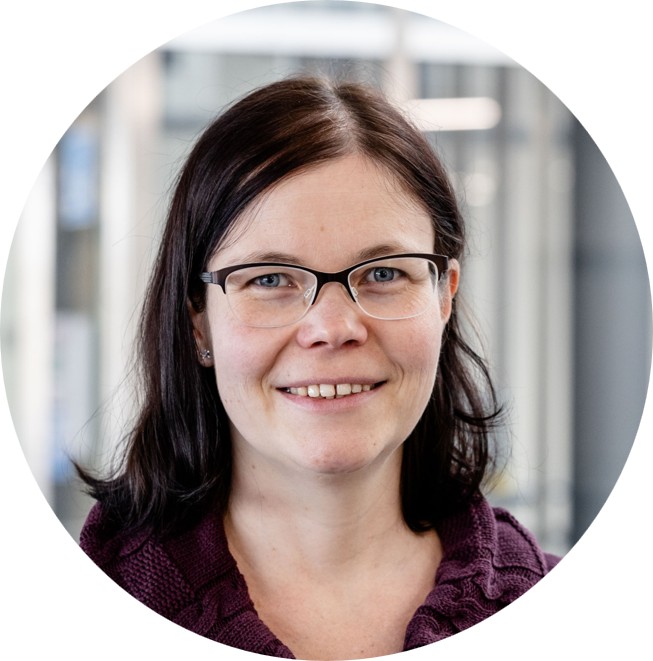
Meet our Researcher: Dr. Ulrike Steffen
What is your current position?
I am research group leader the Department of Medicine 3 – Rheumatology & Immunology at Friedrich‑Alexander‑University and Uniklinikum Erlangen. I also serve as steering committee member of the Transregio CRC 369 “DIONE – Degeneration of Bone due to Inflammation”.
What is your main research focus?
My research team investigates the mechanisms underlying the development of autoimmunity and the interplay of autoantibodies, innate immune cells, and bone loss in rheumatologic diseases.
We focus on:
- Plasma cell development, antibody characteristics and the impact of glycosylation in (auto)immunity
- Regulation of osteoclast activity and bone homeostasis
What does your typical workday look like?
A typical day starts with a well structured to-do list that becomes totally crashed within the first hour. The rest of the day is a mixture of problem solving, experimental design, many discussions with my research team and collaborators, writing and occasional celebrations of breakthroughs.
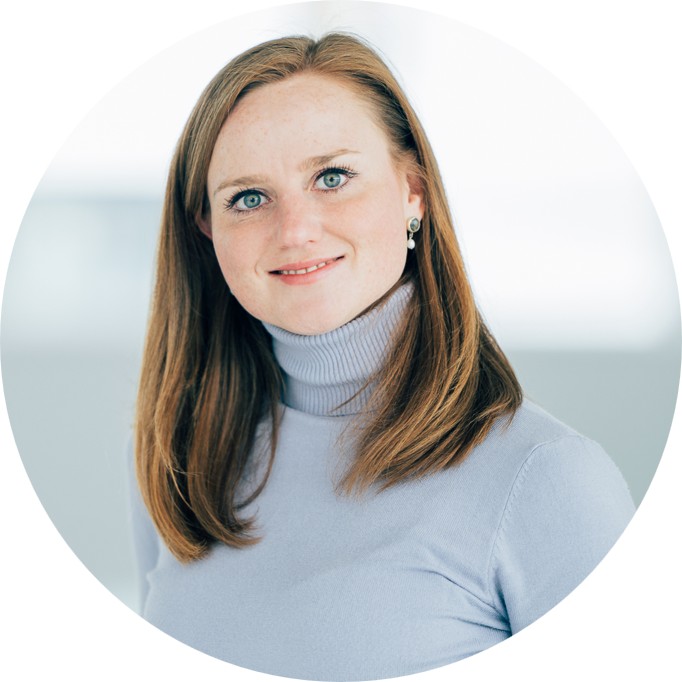
Meet our Researcher: Dr. Darja Andreev
What is your current position?
I am a group leader focused on tissue regeneration and the resolution of inflammation at the Center for Regenerative Therapies Dresden (CRTD), part of Technische Universität Dresden (TUD). I am actively involved in teaching within the Master’s program Regenerative Biology and Medicine.
Within the Transregio CRC 369 “DIONE – Degeneration of Bone due to Inflammation,” I lead project B03, which investigates the protective role of eosinophils in bone loss associated with inflammatory arthritis.
What is your main research focus?
My research focuses on the often overlooked homeostatic and regulatory roles of eosinophils, exploring how these cells, traditionally viewed as pro-inflammatory effectors, also contribute to the resolution of inflammation and tissue regeneration across multiple organs. Building on our discoveries of regulatory eosinophil populations in joints and bone marrow, we investigate how tissue microenvironments shape eosinophil phenotypes at metabolic, epigenetic, and proteomic levels. Our long-term goal is to reprogram eosinophils toward a tissue-protective, pro-resolving state to improve outcomes in chronic inflammatory diseases.
What does your typical workday look like?
I recently launched my own research group in Dresden and the first months have been all about building a lab from the ground up and getting our science rolling. These days, my routine is a mix of mentoring amazing PhD, master’s, and bachelor’s students, staying hands-on at the bench, analyzing data, leading lab meetings, collaborating with clinical partners, and advancing grants and publications. I also teach in the Master’s program Regenerative Biology and Medicine, where I get to share why immunology is such a powerful field and how it shapes our fight against chronic inflammatory diseases.
Meet our Researcher: Dr. Heike Weidner
What is your current position?
I am a postdoctoral researcher at the Bone Lab Dresden. Within DIONE, I am responsible for the experimental work of project A03 in Dresden, led by Prof. Sebastian Zundler (FAU Erlangen) and Dr. Juliane Salbach-Hirsch (Bone Lab Dresden). Beyond DIONE, I also serve as a principal investigator on osteohematology-related research projects.
What is your main research focus?
My work centers on uncovering how anemia shapes bone health, specifically, how changes in bone-forming osteoblasts under anemic conditions can contribute to osteoporosis. I am interested in the journey of erythrocytes from hematopoietic stem cells in myelodysplastic neoplasms, and how immune cells as macrophages and T cells influence this process. Broadly, my research weaves together themes of anemia and chronic inflammatory conditions (including IBD), all with the goal of better understanding the crosstalk between blood, bone, and the immune system.
What does your typical workday look like?
Not two days are exactly alike, but my work usually balances mentoring, collaboration, and performing experiments. I spend part of my day guiding my PhD student and other trainees, coordinating ongoing projects, and diving into data from in vitro and in vivo models. Aside the lab work, I spend time on preparing applications for study approvals, contributing to grant proposals and publications, and teaching medical students. It is a mix of science, strategy, and teamwork.
Play, explore, and become a Bone Saver
We’re excited to launch Bone Eaters, a free serious game that transforms the scientific work of TRR/CRC 369 DIONE into an interactive 3D experience.
Explore the world of osteoimmunology through playful game mechanics, immersive environments, and real footage from preclinical research. Bone Eaters explains cutting-edge biomedical research and shows how complex science can be made tangible, exciting, and accessible.
🎮 Learn by playing
🦴 Discover how bone and immune cells interact
🔬 Experience real research beyond the lab
👉 Download Bone Eaters now and play it under the christmas tree! It’s free on the App Store and Google Play.
Play, explore, and become a Bone Saver.
FAU Erlangen-Nürnberg, Universitätsklinikum Erlangen, Technische Universität Dresden, Universitätsklinikum Carl Gustav Carus Dresden, Leibniz-Institut für Analytische Wissenschaften – ISAS – e.V., Universität Ulm.
Developer: onliveline.nxt GmbH
Design: Alexander Kreismann

